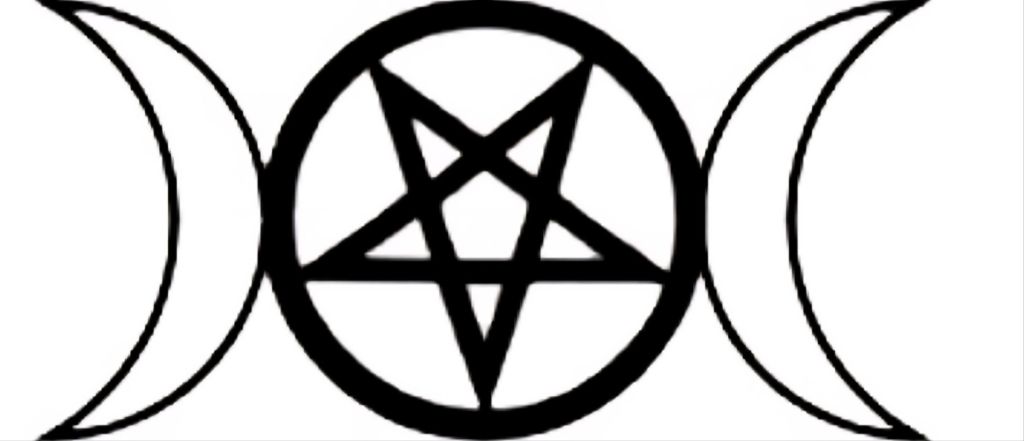
In Letter I, I touched briefly on Christianity and began threading a needle between it and Wicca. Here, I won’t yet tie the knot, but rather sow a little further. What follows is my synopsis of Wicca.
Origin
Wicca was founded in England by Gerald Gardner following the repeal of the British witchcraft law. Gardner was interested in esoterica and the occult, involved in England’s occult community, and founded a coven with the assistance of the first Wiccan high priestess Doreen Valiente in the early 1950s. His new coven, with practices allegedly informed by a coven of witches he’d encountered in Britain’s New Forest, would go on to become today’s Gardnerian Wicca (also British Traditional Witchcraft in England), one of the three (at least) major Wiccan sects, and the most traditional.
Gardner was one of a handful of occultists who would claim to be continuing a lineage of practice dating to pre-Christian times. Alexander Sanders, the founder of Alexandrian Wicca did similarly. These claims were mostly contested and dismissed by historians of modern witchcraft, but that has done little to stop the growing popularity of Wicca.
Modern Popularity
As of 2020, there were as many as 1.5 million witches across the United States. This does not reflect Wicca alone, but also a growing rise in popularity among millennials (and I suppose Gen Z now) to reject traditionalist Christianity for a more free-form practice. Understandably, Wicca has attracted environmentalists, feminists, and groups that might be considered non-conformists, including non-monogamist and LGBTQ+ communities, making Wicca every bit the counterculture movement. Between 1990 and 2008 alone, the number of Wiccans in the U.S. grew from 8,000 to 340,000 according to a Trinity College study.
Beliefs and Practices
At its core, Wicca is a decentralized community of nature worship. There is no unified structure, no set doctrine, no holy text. The only codified rule (and even that is debatable) is the Wiccan Rede, from which we get the Wiccan golden rule: if it harms none, do what ye will. A fairly simple commandment. Harm none, no matter your practice. This single tenet grants freedom for Wiccans to practice their rituals or beliefs with no other restrictions, creating a self-tailored religion.
Wicca traditionally is seen as worshipping dualistic deities, though not all Wiccans follow this (some worship Celtic gods, some Norse, some others still). These deities represent the two-fold nature of The Divine (nature itself). They are the Horned God (masculinity; nature, wilderness, cycle of life and death) and the Triple Goddess (femininity; cycles of the moon: Maiden (new beginnings), Mother (fertility, nurturing, life-giving), and the Crone (knowledge, wisdom).
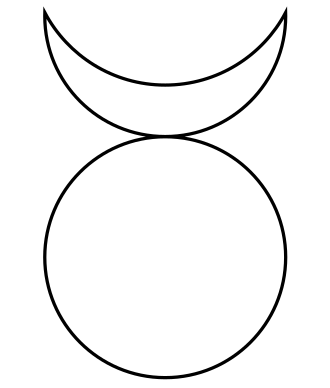
The Horned God, the masculine side of the opposing dualistic theological system, is the god of nature, wilderness, life, and death. He ferries the dead to the Underworld, or Summerland, where souls await rebirth, and each winter he dies during the cold months, and is reborn at Yule (think Christmas). He is represented by the sun and is also called the Oak King and Holly King. This latter idea is a neopagan personification of the conflict between winter and summer, darkness and light, with Oak representing summer and light, while Holly (an evergreen) representing winter and night.
The Goddess is represented as a three-aspect deity: the Maiden, representing new beginnings, birth, youth, and growth seen in the waxing moon; the Mother is fertility, sexuality, stability, power, and life (life-giving, perhaps) seen in the full moon; and the ominous-sounding Crone, who though reminiscent of the long-nosed wrinkly witch in the wood, is actually a symbol of wisdom, knowledge, and death seen in the waning moon. This triune aspect of the Goddess reflects the stages of the lunar cycle, as well as the life cycle of women. The Goddess is at the center of the Dianic sect of Wicca (from the Roman goddess Diana), where she is worshipped predominantly and the God takes a secondary role.
The Divine
I reckon I will need entirely separate articles for everything I touch upon in this letter. Indeed, I have not yet even brushed the surface of Wicca in what I’ve encapsulated here. Before I conclude this missive, however; I should like to discuss this elusive concept of “The Divine.“
Wicca appears for all intents and purposes a dualistic theology. The God and Goddess, at once opposing and in harmony, representing two aspects of the universe, two sides of the same coin. Often they will be referenced as the divine pair, but I’ve also seen reference to their existence being a reflection of, or in service to, a Taoist-like entity simply known as The Divine. This is not a personal deity, you cannot pray to it, it will not speak to you, it has no face, no hands, no unified presence. It simply is. It’s the energy in all things, it’s the motion of time, life, death, the natural order, like a river flowing through all things. This is a concept difficult both to understand and put to the pen. Perhaps it’s like the midi-chlorians of Star Wars? I think the geeks out there would appreciate that idea, and in part it’s not wholly inaccurate. I’m sure George Lucas had Eastern theology and philosophy on his mind when he envisioned the Force.
I think this fluid, ungraspable Divine is the heart of Wiccan worship; it’s meditating on and channeling it, feeling connected to it, part of it. In this way, we can see Wicca as not just pagan (perhaps not even at all), but also pantheistic and possessing certain qualities reminiscent of Buddism, Taoism, or even Christianity (or monotheistic in general, though this may be my stretch of the imagination). We can begin to view witchcraft (which though many Wiccans practice, not all witches are Wiccan) and ritual practice as closer to prayers and sacraments; as a means of coming closer to and feeling the flow of the Divine. To be a part of it.
From my research, one could say that a Wiccan should be considered, and often may refer to themself as: practitioners, as opposed to believers. Thus, Wicca appears to be more of a ritualistic experience with nature rather than the worship of its gods.

My latest entries:
 PAGAN NOMAD
Leave a comment