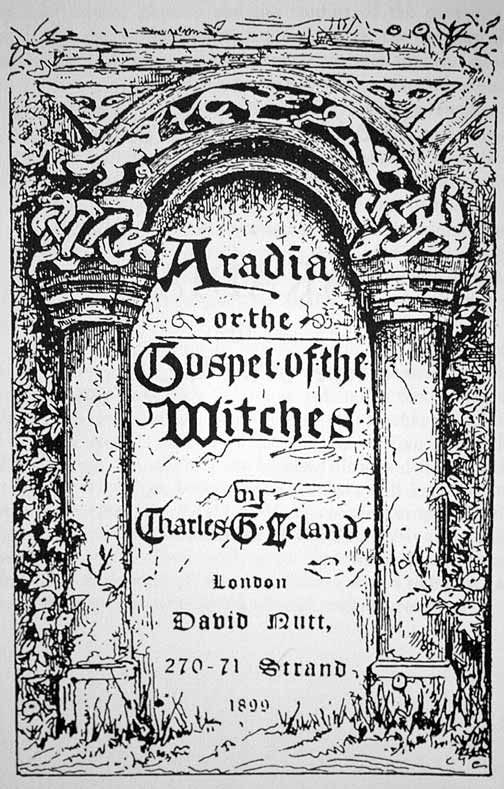
Listening to an audiobook today by Margot Adler, Drawing Down the Moon, I came across an interesting, and as it were, cardinal pillar of Wicca: the Charge of the Goddess. The Charge typically takes place after the ritual where the book gets its name: Drawing Down the Moon. The Charge encompasses a promise that the Goddesses will instruct and guide the witches that follow her. Fairly kosher.
The issue that arises for me as I study this is its origin. First brought into Wicca by its founders, Gardner and Valiente, parts of its prose are borrowed from the much-refuted 1899 work of American folklorist Charles Godfrey Leland titled Aradia, or the Gospel of the Witches.
Wicca strongly opposes the idea of any connection between itself and Christian Satan (not Satanism, the atheistic movement, but Satan the devil). This is a message preached high and low by Wiccans. However, I struggle to reconcile this with the incorporation of this text into their religion, whereby Diana and Lucifer (the morning star) have a child, Aradia (another name for the Goddess in Wicca, and used interchangeably with Diana), who is sent to teach and guide the witches. I have tried to find Wiccans that address this issue, but to little avail.
What I have found is such:
Leland claimed to have received a manuscript from a Florence witch named Margherita who, she claimed, knew so-called “ancient rituals.” This manuscript was supposedly from a pre-Christian witch-cult in Italy that had survived there and practiced the “Old Religion.” The interest in this text to Wicca is as proof of a surviving lineage of pre-Christian beliefs in Europe. This was especially important to Gardner, whose claim of the New Forest cult was severly doubted by many.
Leland thought the manuscript authentic, though written by Margherita, thus he did not know if it was of oral or written origin. Many speculated the manuscript may have even been entirely fabricated by Margherita.
The reference to Diana and Lucifer is an interesting one. In the proposed answers I’ve stumbled across, some say Lucifer, which means morning star, is a reference to Apollo. However; Apollo, the Greco-Roman god of the sun, is also represented by the planet Mercury, which was considered historically the “morning star.”
The issue I take with this idea is that Diana is a Roman goddess. While Apollo may have existed in both admittedly related pantheons, the reference to Mercury as the morning star appears wholly archaic Greek. The Romans considered Venus to be the morning star, and Lucifer the figure often portrayed as the man bearing a torch, heralding the dawn. Little else is known of the Roman mythological figure named Lucifer. Why a minor Roman figure, I hesitate to call him a deity in such context, is compared to the goddess Diana, the virgin goddess of the hunt, makes little sense to me, other than in the most probable case of diabolism.
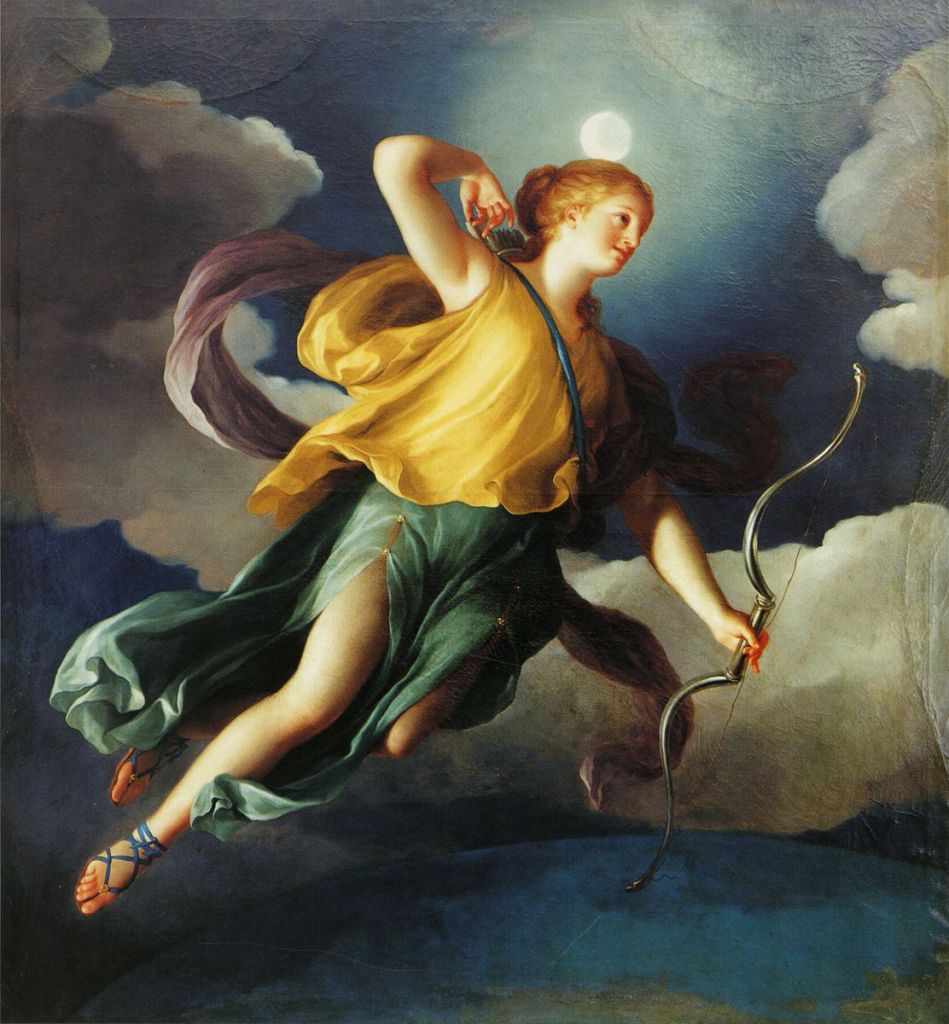
This is not diabolism in the sense of devil worship, but rather the efforts of the Church to rewrite commoner myths and superstitions (of which there exists some regarding a figure not far off from Aradia) to turn laypeople away from anything that might distract from the One God.
Alternatively, Lucifer’s appearance in a manuscript by a Florence witch may have something to do with an older, less pleasant idea or practice of witchcraft than what Gardner presented in Wicca. Or, it may be a misunderstanding altogether.
To establish a sense of lineage and ancient vitality to his new religion, Gardner undoubtedly was looking for prose that would fit into the bits and pieces of knowledge and ritual he said he received from the New Forest coven. I can understand why he would take from Leland’s manuscript, and why it would be of principal importance to Wicca as a whole, providing some measure of substance to the claim that Wicca was a continuation of an ancient, pre-Christian religious tradition.
However; given the criticism and skepticism thrown upon Wicca, especially in its early years: seen as evil witches and devil worshippers, I have trouble understanding why they would use excerpts from such a text. Even Valiente has noted that it is likely this connection to Lucifer that has made many neo-pagans uncomfortable. So, why use it? knowing it would undoubtedly draw ire.
Leave a comment, let me know your thoughts or insights!
My latest entries:
 PAGAN NOMAD

Leave a comment